
Common Gratitude Journal Mistakes and How to Fix Them Simply
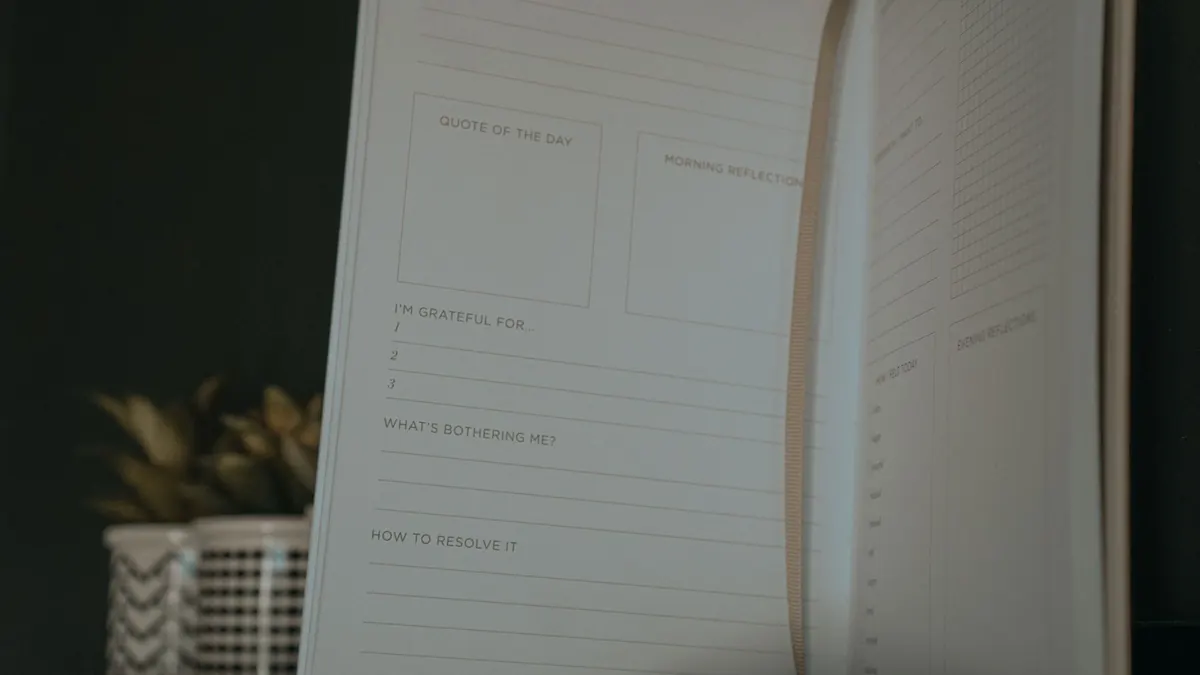
Most people who abandon a gratitude journal don't quit because they're undisciplined. They quit because the habit slowly turns into something else: a chore, a performance, or a list of vague sentences scribbled at 11 p.m. with the light already off. The idea behind the practice is sound. Noticing what is good, specifically and honestly, tends to make a day easier to carry. But the small mechanics matter more than most advice admits. Below are the mistakes that come up again and again, and the fixes that are simple enough to actually keep.
Mistake One: Entries So Vague They Say Nothing
"Grateful for my family." "Thankful for today." "Grateful for my health." These sentences are not wrong, exactly. They're just empty. Written a month apart, they'd be indistinguishable, and that's the problem. A vague entry gives your mind nothing to hold on to, so the practice becomes a box-ticking exercise rather than a moment of noticing.
The fix is to add one concrete detail. Not five. One. Something you could photograph or describe to a friend.
- Instead of: "Grateful for my friend." Try: "Grateful that Maya called back even though she was clearly mid-chaos, and listened to me complain about the same thing twice."
- Instead of: "Grateful for good weather." Try: "Grateful the sun came out at 4 p.m. and I sat on the step for ten minutes without my phone."
- Instead of: "Grateful for my job." Try: "Grateful that the meeting ended twenty minutes early and nobody noticed."
A quick two-question check
Before you close the notebook, ask yourself: What exactly happened? and Why did it matter today? If you can't answer the first one, the entry is too thin. The second question is optional, but it's often where the real value sits — the small event matters because you were tired, or because it arrived after a difficult morning, or because someone remembered something you'd mentioned once.
Mistake Two: Forced Positivity
This one is more common than people admit. A gratitude journal becomes a place where every bad day has to be reframed into a lesson. A miserable afternoon is described as "a chance to grow." A cancelled plan becomes "an opportunity for rest." You know, as you write it, that you don't believe a word.
Forced positivity is corrosive because it teaches you to distrust your own journal. If the notebook only accepts the polished version of your day, you'll stop bringing it anything real.
A few practical alternatives:
- Lower the bar to "true" rather than "good." "I'm grateful the day is over and the kitchen is clean" counts. So does "grateful I didn't send the email I drafted at lunchtime."
- Allow neutral entries. Not everything has to be uplifting. "Grateful for a completely unremarkable Wednesday" is a legitimate thing to write, and sometimes the most honest one.
- Separate the two jobs. If you need to record a hard day, record it plainly, without a silver lining. Gratitude and difficulty can share a page without one redeeming the other.
The eye-roll test
Read the entry back. If you'd roll your eyes hearing it said out loud, rewrite it. That flinch is a reliable signal that you're performing rather than noticing.
One sensible note: if the days you can't find anything to appreciate start outnumbering the ones you can, and that flatness lasts for weeks, that's worth mentioning to a doctor or a mental health professional rather than pushing through with a notebook.
Mistake Three: Poor Timing
Timing quietly decides whether this habit survives. Two patterns kill it fastest. The first is writing in bed, at the very end of the day, when you are too tired to form a sentence — the entries get shorter, then sloppier, then stop. The second is saving it all up and writing a week's worth on Sunday evening, which produces a vague summary rather than an actual memory.
Better approach: attach the practice to something that already happens, so it doesn't need its own slot in the day. Some anchors that work:
- After the first coffee, before you open your inbox.
- On the commute, in a notes app if paper isn't practical.
- Right after lunch, while the afternoon is still uncluttered.
- Early evening, before dinner — late enough to include the day, early enough to have the energy for it.
Two or three minutes is plenty. If your entry takes longer than that, you're probably writing an essay rather than noticing something. And if evenings genuinely work better for you, try shifting the writing to an hour earlier, before tiredness sets in.
Mistake Four: Turning It Into Homework
A gratitude journal is not a productivity metric. The moment it becomes a streak to protect, three things tend to happen: the entries get padded to hit a number, missed days produce guilt, and the whole thing starts to feel like an obligation with a leaderboard attached.
Fix it by lowering the target. One to three entries is enough. A single specific sentence on a bad day is a complete practice, not a failed one. Skip a day without compensating for it later — bulk catch-up entries are almost always worthless, because you're reconstructing rather than remembering. Keep the pen and notebook somewhere visible, so the barrier is physical rather than motivational. And if you share the habit with anyone, share it sparingly; an audience tends to push the writing toward what sounds impressive rather than what's true.
Mistake Five: Never Looking Back
Many people write diligently for months and never reread a page. That's a waste, because the rereading is where the practice pays off. Once a week or so, spend five minutes on the last few pages. You'll notice patterns: the same names appearing, the same small pleasures, the things you keep saying you're grateful for but never make time for. That's useful information about how you actually want to spend your days, and it's difficult to see any other way.
A Simple Reset for This Week
If your journal has gone quiet, don't restart with a new notebook and a grand plan. Use the one you have, tonight or tomorrow morning, and keep it small.
- Pick a time you're reliably awake and not rushed, and stick it to an existing routine.
- Write one entry with a detail specific enough that you'd remember the moment in a year.
- Skip the silver lining if the day was hard. Write what's true instead.
- Aim for two or three minutes. Stop while it still feels easy.
- At the end of the week, read the pages back and note anything that repeats.
That's the whole method. No streaks, no quotas, no requirement to feel grateful on schedule. Just a few honest, specific sentences, written at a time when you can actually pay attention — which is, more often than not, enough to make the day a little easier to carry.
Photo: Nathan J Hilton / Pexels